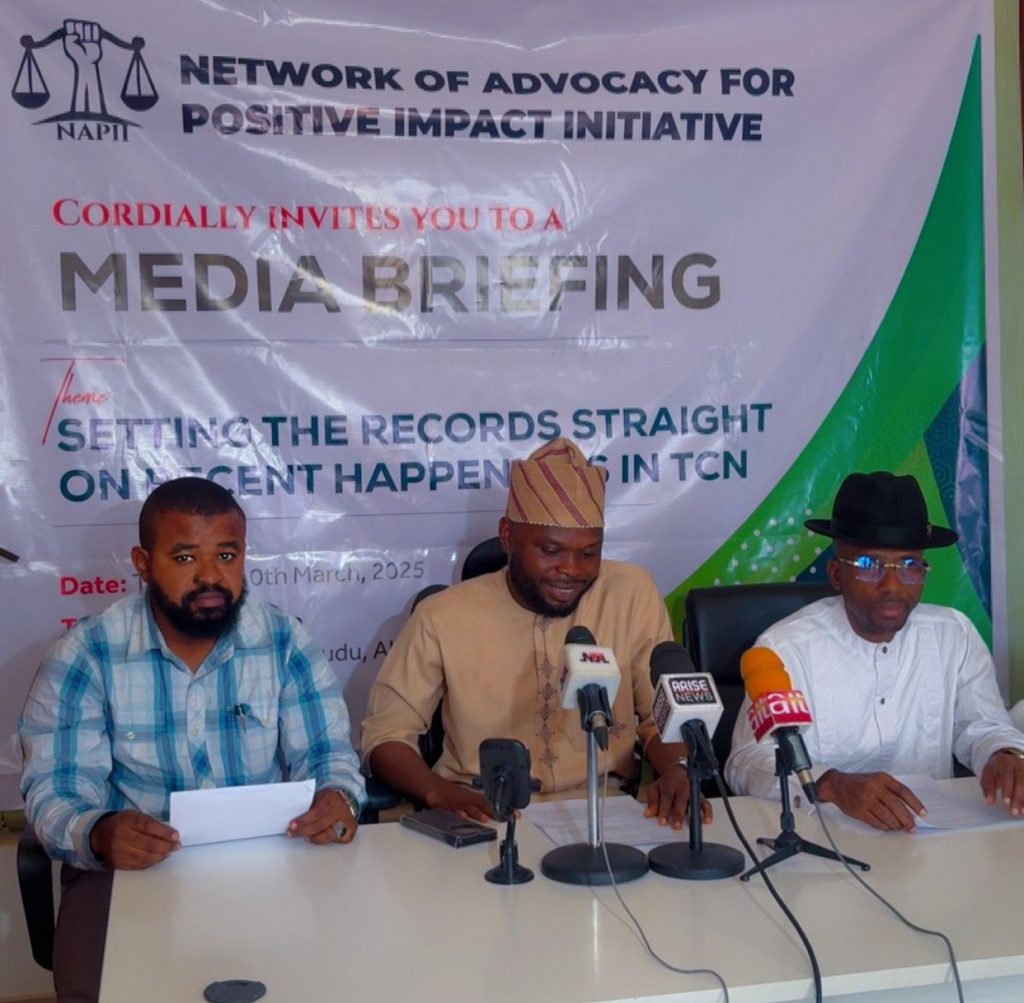
Abuja, March 10, 2025
The Network of Advocacy for Positive Impact Initiative (NAPII) has urged stakeholders in Nigeria’s power sector to refrain from actions capable of distracting the Transmission Company of Nigeria (TCN), warning that unfounded allegations could undermine efforts aimed at strengthening the country’s electricity infrastructure.
Speaking during a media briefing in Abuja on Monday, the Executive Secretary of NAPII, Comrade William Smith Bassey, said the organization was compelled to address recent allegations circulating in the media concerning the operations and leadership of TCN.
Bassey emphasized that while public scrutiny of government institutions is an essential component of democratic governance, such scrutiny must be based on verified facts and pursued through appropriate institutional mechanisms.
According to him, the electricity transmission network remains the backbone of Nigeria’s power supply system, linking generation companies with distribution companies across the country. As such, any narrative capable of eroding public confidence in the institution should be handled with caution and responsibility.
He noted that the Transmission Company of Nigeria operates within well-established administrative and regulatory frameworks that provide oversight and ensure compliance with due process in areas such as procurement, project implementation, and operational management.
“Institutions like the Federal Ministry of Power and other regulatory bodies exist to provide the necessary oversight that guarantees transparency and accountability. Where concerns arise, they should be addressed through these channels rather than through public allegations that may distort the realities of the sector,” Bassey stated.
The advocacy group observed that several of the allegations currently circulating appear to rely on broad claims that do not adequately reflect the complexities involved in managing a national transmission network.
NAPII further highlighted the technical and logistical challenges associated with maintaining Nigeria’s electricity transmission infrastructure, noting that transmission assets are spread across the country, including remote and difficult terrains that require constant monitoring and emergency response when faults occur.
According to Bassey, engineers and technical teams within TCN work continuously to ensure the safe and efficient transmission of electricity across the national grid, often under challenging operational conditions.
“At a time when Nigeria is making deliberate efforts to improve grid stability, expand transmission capacity, and enhance electricity delivery to homes and businesses, it is important that stakeholders adopt a patriotic approach that supports rather than undermines these efforts,” he said.
The organization also advised individuals or groups with genuine concerns about the operations of the Transmission Company of Nigeria to utilize available institutional processes, including requesting relevant budgetary and operational information through official channels such as records approved by the National Assembly.
Bassey stressed that internal mechanisms exist within government institutions to address issues relating to administration, procurement, and policy implementation.
“Our position is that national institutions that are central to the functioning of the economy must be supported and constructively scrutinized through proper channels, not weakened by allegations that may not reflect the full picture,” he added.
The advocacy group expressed confidence in the current management of TCN and called on stakeholders within the power sector to focus on collaborative efforts that would strengthen Nigeria’s electricity transmission system.
NAPII reiterated its commitment to promoting responsible advocacy, transparency, and balanced public discourse on issues affecting national development, while urging the media to continue upholding professionalism and accuracy in reporting matters related to critical sectors of the economy.